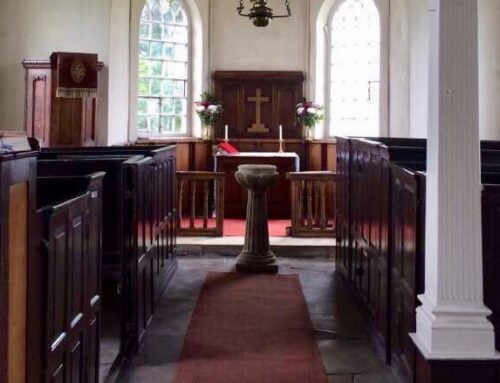
In the early 1960s, before the reforms of Vatican II, it was much more common for the Vatican to distribute relics for devotional use. Fr. Joe’s father spent a number of years in the seminary, and during that time, received several relics, each accompanied by official certificates of authenticity issued by the Vatican. On the occasion of Fr Joe’s priesting this July, his mother entrusted the care of these relics to him. For the remainder of his curacy, they will be housed at Holy Trinity Church, where they may be incorporated into our worship, especially on the feast days of each saint.
The relics include the following saints:
| Saint Name | Feast Day |
| Saint Francis of Assisi | October 4th |
| Saint Jude Thaddeus, Apostle | October 28th |
| Saint Martin de Porres | November 3rd |
| Saint Charles Borromeo | November 4th |
| Saint Frances Xavier Cabrini | November 13th |
| Saint Charles of Sezze | January 6th |
| Saint Catherine of Siena | April 29th |
| Saint Veronica Giuliani | July 10th |
| Saint John Vianney | August 4th |
| Saint Jane Frances de Chantal | August 12th |
| Saint Pope Pius X | August 21st |
For some, this may be a source of excitement and devotion; for others, it may feel strange or even troubling. For those raised in a Protestant context, they may associate relics with superstition or excess. So what are relics really, and how can they help us to grow in faith?
What are relics?
The word relic simply means “remains.” In the Christian tradition, relics are the earthly remains or belongings of the saints. The most precious relics are fragments of their bodies — bones, hair, or blood — because these bodies were temples of the Holy Spirit, sanctified in life and destined for resurrection glory. Other relics may be items the saints used in life (clothing, rosaries, books) or objects touched to their tombs.
Relics are not magical charms, nor are they worshipped. The Church makes a clear distinction between adoration, which belongs to God alone, and veneration, which is the honour given to God’s saints. When we honour relics, we are not giving glory to the object itself, but to God who made that saint holy. Relics are tangible reminders that God’s grace has touched real human lives, and through them, continues to touch us.
Relics in Scripture
The veneration of relics may sound foreign, but it is deeply biblical. Again and again, the Bible shows God using material things as channels of His power and presence.
- In the Old Testament, a dead man was thrown into the grave of the prophet Elisha. When his body touched Elisha’s bones, the man came back to life (2 Kings 13:20–21).
- In the Gospels, a woman suffering from haemorrhages was healed when she touched the hem of Christ’s garment (Mark 5:25–29).
- In the Acts of the Apostles, handkerchiefs and aprons that had touched St Paul were carried to the sick, and they were healed (Acts 19:11–12).
These stories show that God chooses to work through material signs. If He can work healing through the hem of a garment or the bones of a prophet, why should He not continue to work through the relics of His saints?
Relics in the life of the Church
From the earliest days, Christians have honoured the relics of martyrs and saints. The faithful gathered at their tombs to celebrate the Eucharist, remembering that these holy men and women had shed their blood for Christ. St Augustine tells us that “the bodies of the saints are not to be despised, especially since they served as instruments of the Holy Spirit and members of Christ.”
Through the centuries, the faithful have seen relics not as curiosities, but as treasures of the Church. They remind us that holiness is not abstract. The saints were flesh and blood, just as we are. Their relics are visible signs that the grace of God truly transforms human lives.
At the same time, the Church has always cautioned against superstition. Relics are not to be treated as magical objects, but as sacramentals — holy signs which point us towards Christ and dispose us to receive His grace.
What relics mean for us today
So how might relics enrich our prayer life here in Tarleton and Rufford?
First, relics remind us that we belong to the communion of saints. When we pray before a relic, we are not alone. We are joined by a great cloud of witnesses (Hebrews 12:1), brothers and sisters who have gone before us and now pray for us in the presence of God.
Second, relics encourage us to seek the intercession of the saints. Just as we ask a friend to pray for us, so we ask the saints to intercede on our behalf. Their relics help us to feel that connection more vividly.
Third, relics can deepen our sense of God’s holiness. Standing before a relic, we are confronted with the reality that ordinary men and women gave their very bodies for the love of Christ. Their faith challenges us to live more fully for Him.
Finally, relics can focus our communal prayer. When the relics are placed before the altar or carried in procession, they become a visible reminder that our worship is not confined to this parish or this age. We are united with the saints in glory and the whole Church across time and space.
A way of prayer
How, then, might we pray with relics?
- Quiet reflection: Simply spend a few moments in silence before the relic, asking God to strengthen your faith as He did in the life of this saint.
- Intercession: Ask the saint to pray with you and for you, especially in times of struggle.
- Thanksgiving: Give thanks to God for the witness of the saint, and for the ways their life points you back to Christ.
- Communal prayer: Join in the prayers of the Church when relics are set before us in liturgy, letting them draw us deeper into the mystery of God’s kingdom.
Conclusion
Relics are not strange curiosities from a bygone age. They are signs of God’s living presence among us, reminders that His grace transforms ordinary human lives. They anchor us in the communion of saints and invite us to draw closer to Christ through the prayers of His holy ones.
As a parish, may these new treasures deepen our devotion, enlarge our sense of belonging to the Church universal, and strengthen us in faith, hope, and love.